

If you’re craving an authentic, tangy, and utterly satisfying noodle dish that just so happens to be completely plant-based, you’ve got to try this Vegan Pad Thai Recipe. I absolutely love how this turns out every single time — packed with vibrant veggies, a perfectly balanced sauce, and that irresistible wok-fried texture. Plus, it’s simple enough to whip up on a weeknight, yet impressive enough for when friends pop over. Let me walk you through all my tips and tricks to make your Vegan Pad Thai one of your go-to favorite meals!
Why You’ll Love This Recipe
- Vibrant Veggie-Packed Flavor: The combination of fresh spring onions, crisp green beans, and crunchy carrots really makes each bite pop with freshness.
- Easy and Quick to Make: You’ll have this on the table in under 40 minutes, perfect for busy evenings when you want something healthy without the hassle.
- Balanced Sweet, Sour, and Savory Sauce: My homemade tamarind-based sauce nails that classic pad thai flavor, vegan style.
- Gluten-Free and Allergy-Friendly: Using rice noodles and tamari means it’s kind to those avoiding gluten without sacrificing taste.

Ingredients You’ll Need
When I gather ingredients for my Vegan Pad Thai Recipe, I make sure to have a good mix of fresh vegetables and pantry staples that pack serious flavor. The sauce ingredients are key, so keep an eye out for quality tamarind and a good vegan fish sauce alternative if you can find one.
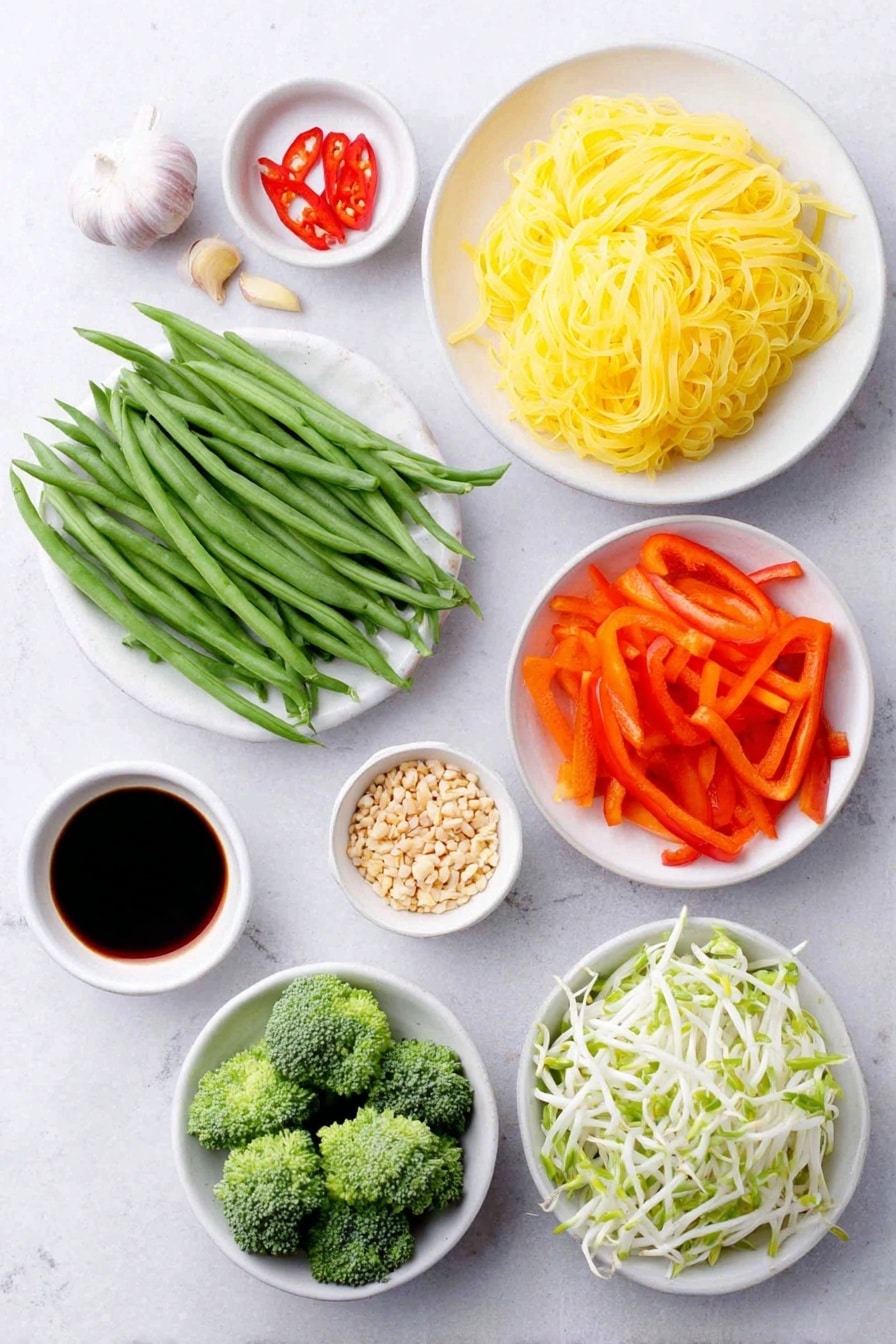
- Wide rice noodles: The base of the dish; soaking them properly is crucial so they don’t get mushy.
- Peanut oil: I prefer this for its neutral flavor and high smoke point, but you can swap in another vegetable oil.
- Spring onions: Adds freshness and a bit of bite at the start of the stir-fry.
- Garlic cloves: I always finely slice them so they infuse the oil perfectly without burning.
- Hot red chilli: Adjust to taste; it brings that signature Pad Thai heat.
- Carrots: Shaved into ribbons for a fun texture and natural sweetness.
- Green beans: Cut diagonally to match the bite-size veggies and keep that satisfying crunch.
- Broccoli: Divided into florets to cook evenly and add hearty green goodness.
- Red pepper: Thinly sliced to brighten the dish with color and sweetness.
- Roasted & unsalted peanuts: Pounded for that irresistible crunch and nutty saltiness.
- Mung bean sprouts: Adds fresh, crisp texture on top at the end.
- Fresh coriander: My favorite herb to garnish — it lifts all the flavors beautifully.
- Tamarind sauce: The tangy heart of the sauce; make sure it’s fresh and not too concentrated.
- Tamari / soy sauce: For saltiness and umami without gluten.
- Vegan fish sauce or extra tamari: This deepens the savory notes — I always test mine before adding more.
- Maple syrup: Sweetens things up naturally and balances the sour tamarind.
Variations
One of the things I enjoy most about this Vegan Pad Thai Recipe is how flexible it is. Feel free to swap out veggies based on what you have on hand or your season’s favorites — it still comes together beautifully every time.
- Add tofu: For an extra protein boost, pan-fry some firm tofu cubes and toss them in at the end. My family goes crazy for this version.
- Make it nut-free: Simply skip the peanuts and swap peanut oil for a neutral avocado oil; it still tastes fantastic.
- Use spiralized zucchini: For a lower-carb twist, substitute some or all of the noodles with zucchini noodles — just add them near the end so they don’t get soggy.
- Spice levels: I’ve learned you can easily adjust the chili here, adding more or less to suit everyone’s palate without losing the dish’s essence.
How to Make Vegan Pad Thai Recipe
Step 1: Perfectly Soak Those Rice Noodles
I used to struggle with soggy or sticky noodles until I nailed down this method: soak the wide rice noodles in hot water just long enough so they start to soften but aren’t fully cooked. Halfway through soaking, lift the lid and give them a good stir to prevent clumps — this little trick makes all the difference! Once soaked, drain and set them aside. You might be tempted to toss a bit of oil through them to avoid sticking, but I actually don’t find it necessary if you stir them well in the next steps.
Step 2: Whip Up the Sauce
While the noodles soak, mix your tamarind sauce, tamari, vegan fish sauce (or extra tamari), and maple syrup in a bowl. A quick heads-up — if you’re using a store-bought tamarind paste, start with less because it’s often more sour and concentrated than homemade tamarind block paste. You can always adjust to balance that perfect sweet-sour-savory harmony you want.
Step 3: Stir-Fry Your Aromatics and Veggies
Heat a wok or large pan over high heat and add 1 tablespoon of peanut oil until it almost smokes. Toss in sliced spring onions, garlic, and chillies, stirring constantly until the spring onions soften and the garlic is fragrant but not burnt. Transfer these aromatics to a plate, leaving as much of that flavored oil in the wok as you can.
Next, add another tablespoon of oil to the wok (no need to wash it) and stir-fry your vegetables in sequence: start with broccoli florets, then green beans, red pepper, and finally carrot ribbons — giving each a minute or two to cook while keeping their crunch. This layering technique ensures each veggie finishes perfectly.
Step 4: Bring It All Together
Transfer your veggies to a big plate and pour the sauce into the bottom of the hot wok. Add the noodles next — they may have clumped but don’t worry, the sauce and heat will separate them beautifully. Return your aromatics and stir-fried veggies to the wok, mixing everything well. Keep stirring and warming through for a minute or two until everything is piping hot.
Step 5: Finish and Serve
Divide the Vegan Pad Thai between plates, then sprinkle generously with mung bean sprouts and crushed roasted peanuts for texture. I always serve it with fresh lime wedges on the side because the squeeze of lime really brings all the flavors alive. Trust me, you’ll want that zing!
Pro Tips for Making Vegan Pad Thai Recipe
- Noodle Soaking Mastery: Stir your noodles during soaking to prevent clumping – this saves so much headache later!
- Balance Your Sauce: Taste your tamarind first, especially if using store-bought paste, and adjust sweetness accordingly with maple syrup.
- Veggie Timing: Add veggies in order of cooking time to keep them all perfectly crisp-tender.
- Heat Management: Keep your wok hot on high, but watch your garlic closely to avoid burning it—they turn bitter fast!
How to Serve Vegan Pad Thai Recipe
Garnishes
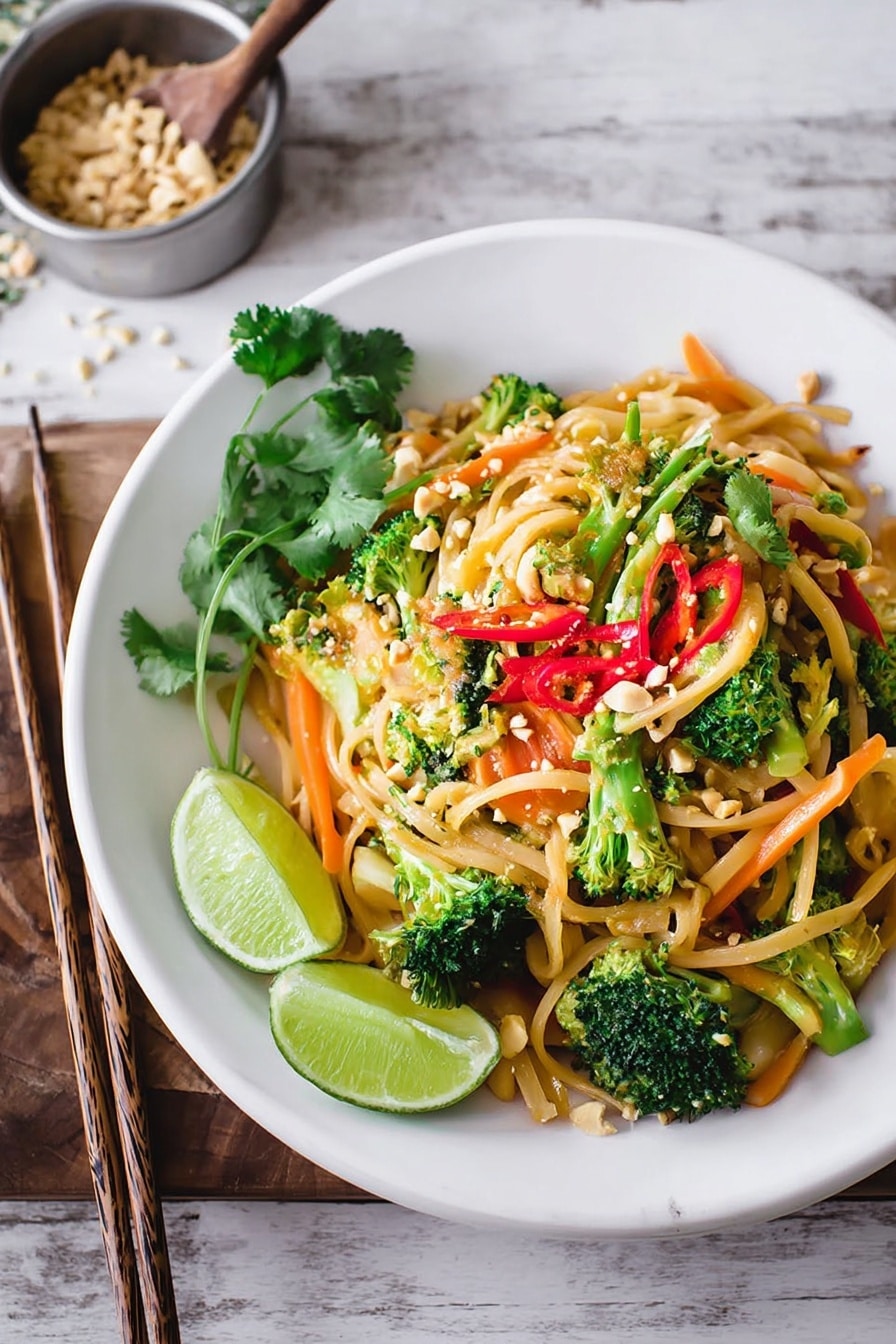
I’m all about those fresh, bright touches at the end. I love piling on mung bean sprouts and crushed peanuts for crunch, finishing with heaps of fresh coriander because it adds a cooling, herbal lift that cuts through the richness. And don’t forget fresh lime wedges—it’s a game-changer to squeeze over just before eating.
Side Dishes
For a full meal, I often pair my Vegan Pad Thai with a simple cucumber salad or Thai-style pickled vegetables to add tangy contrast. Spring rolls or a light green papaya salad also make awesome companions for those who want to impress at dinner.
Creative Ways to Present
Once, I served this Vegan Pad Thai in cute pineapple bowls for a tropical-themed dinner party — it was a huge hit! You can also portion it into lettuce cups for bite-sized fun or spread it family-style on a big platter with garnishing stations so everyone can personalize their bowls. Presentation definitely amps up the fun here!
Make Ahead and Storage
Storing Leftovers
I store leftover Vegan Pad Thai in an airtight container in the fridge, where it keeps well for up to 3 days. I usually separate garnishes like peanuts and sprouts to keep their crunch fresh, adding them just before reheating or serving again.
Freezing
This recipe freezes okay but I personally prefer fresh because the texture of the noodles softens a bit after thawing. If you do freeze, pack it in a freezer-safe container without the fresh garnishes, and thaw overnight in the fridge.
Reheating
To reheat, I toss the leftovers into a hot pan with a splash of water or tamari to freshen the noodles and prevent drying out. Stir constantly just until warmed through, then add cold garnishes like sprouts and peanuts right before serving to keep things lively.
FAQs
-
Can I make this Vegan Pad Thai Recipe gluten-free?
Absolutely! The recipe uses rice noodles which are naturally gluten-free, and I recommend tamari instead of regular soy sauce to keep gluten out. Just double-check the labels on your vegan fish sauce if you include it.
-
What can I substitute for vegan fish sauce?
If you can’t find vegan fish sauce, simply use extra tamari or soy sauce plus a splash of seaweed broth or miso paste to mimic that umami depth. I’ve found this combo really keeps the sauce flavorful.
-
Can I use other types of noodles?
Sure thing! While wide rice noodles are traditional, you can also try thinner rice noodles or even wheat-free soba noodles. Just adjust soaking and cooking times accordingly to avoid mushiness.
-
How spicy is this Vegan Pad Thai Recipe?
The heat level depends on how much fresh chili you add. I suggest starting with one hot red chili finely sliced, then adding more if you like it spicier. Remember, you can always balance heat with a bit more maple syrup!
-
Can I prep this recipe ahead of time?
You can prep the sauce and chop all veggies in advance, but I recommend soaking the noodles and stir-frying just before serving to keep the perfect texture and flavors bright.
Final Thoughts
This Vegan Pad Thai Recipe has become a beloved staple in my kitchen — it’s vibrant, comforting, and filled with flavor without any animal products. Whenever I make it, I’m reminded how accessible and delicious plant-based cooking can be. You’ll enjoy how easy it is to customize and how crowd-pleasing it turns out. Give it a try and make it your own, I promise you’re going to love every bite!
Print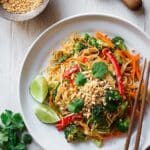
Vegan Pad Thai Recipe
- Prep Time: 20 minutes
- Cook Time: 15 minutes
- Total Time: 35 minutes
- Yield: Serves 2-3
- Category: Main Course
- Method: Stovetop
- Cuisine: Thai
- Diet: Vegan
Description
This vegan pad thai is a vibrant, flavorful, and healthy take on the classic Thai street food. Made with wide rice noodles and a variety of fresh vegetables stir-fried in a tangy tamarind and tamari sauce, it’s completely plant-based, gluten-free, and perfect for a quick yet satisfying meal. The dish is garnished with crunchy peanuts and fresh coriander, adding texture and brightness to every bite.
Ingredients
Noodles
- 200 g / 7 oz wide rice noodles
Vegetables
- 2 spring onions, sliced
- 2 garlic cloves, finely sliced
- 1 hot red chilli, finely sliced
- 2 carrots, shaved into ribbons with a speed peeler
- 1 large handful of green beans, cut diagonally
- ½ small broccoli, divided into florets
- 1 red pepper, finely sliced
- ½ cup mung bean sprouts
Sauce
- 5 tbsp tamarind sauce*
- 1 tbsp tamari / soy sauce
- 2 tbsp vegan fish sauce* or more tamari / soy sauce
- 2-3 tbsp maple syrup, adjust to taste
Others
- 2 tbsp peanut oil (or other high smoke point oil)
- ¼ cup roasted & unsalted peanuts, pounded in a pestle & mortar
- Fresh coriander, to garnish
Instructions
- Prepare the noodles: Soak the rice noodles according to the packet instructions, but do not fully cook them as they will cook further in the wok. Stir the noodles occasionally during soaking to prevent clumping and sticking.
- Drain and set aside: Once soaked, drain the noodles. Optionally toss with a little oil to keep them separated, though this is not necessary.
- Mix the sauce: Combine tamarind sauce, tamari or soy sauce, vegan fish sauce (or more tamari), and maple syrup in a small bowl. Adjust tamarind amount if using concentrated shop-bought paste to balance sourness.
- Cook aromatics: Heat 1 tbsp peanut oil in a wok or large frying pan over high heat until almost smoking. Add sliced spring onions, garlic, and hot red chilli. Stir-fry constantly until spring onions are softened and garlic is fragrant, then transfer to a plate, leaving oil in the wok.
- Stir-fry vegetables: Add another tablespoon of oil to the wok. Add broccoli florets first, followed by green beans, red pepper, and carrot ribbons, with a minute or two between additions. Stir-fry until vegetables are cooked but still have crunch.
- Add sauce and noodles: Remove vegetables to a plate. Pour the prepared sauce into the wok. Add the noodles and stir to separate any clumps with the heat and sauce.
- Combine all ingredients: Return the aromatics and stir-fried vegetables to the wok. Mix well and let everything warm through for 1-2 minutes, stirring constantly.
- Serve: Divide the pad thai between 2-3 plates. Garnish with mung bean sprouts, crushed roasted peanuts, and fresh coriander. Serve with lime wedges on the side if desired.
Notes
- This vegan pad thai is quick to prepare and gluten-free, making it accessible for many dietary needs.
- Adjust the maple syrup to balance the sourness of the tamarind sauce according to taste.
- If using tamarind paste, be cautious as it may be more concentrated than homemade tamarind blocks.
- Feel free to substitute or add other vegetables as desired or based on seasonal availability.
- Tossing the noodles with a little oil after soaking can help prevent sticking but is optional.
Nutrition
- Serving Size: 1 serving (approx. 1/3 of total recipe)
- Calories: 534.16 kcal
- Sugar: 27.62 g
- Sodium: 1881.81 mg
- Fat: 15.72 g
- Saturated Fat: 2.57 g
- Unsaturated Fat: 13.15 g
- Trans Fat: 0 g
- Carbohydrates: 88.8 g
- Fiber: 5.74 g
- Protein: 10.61 g
- Cholesterol: 0 mg