
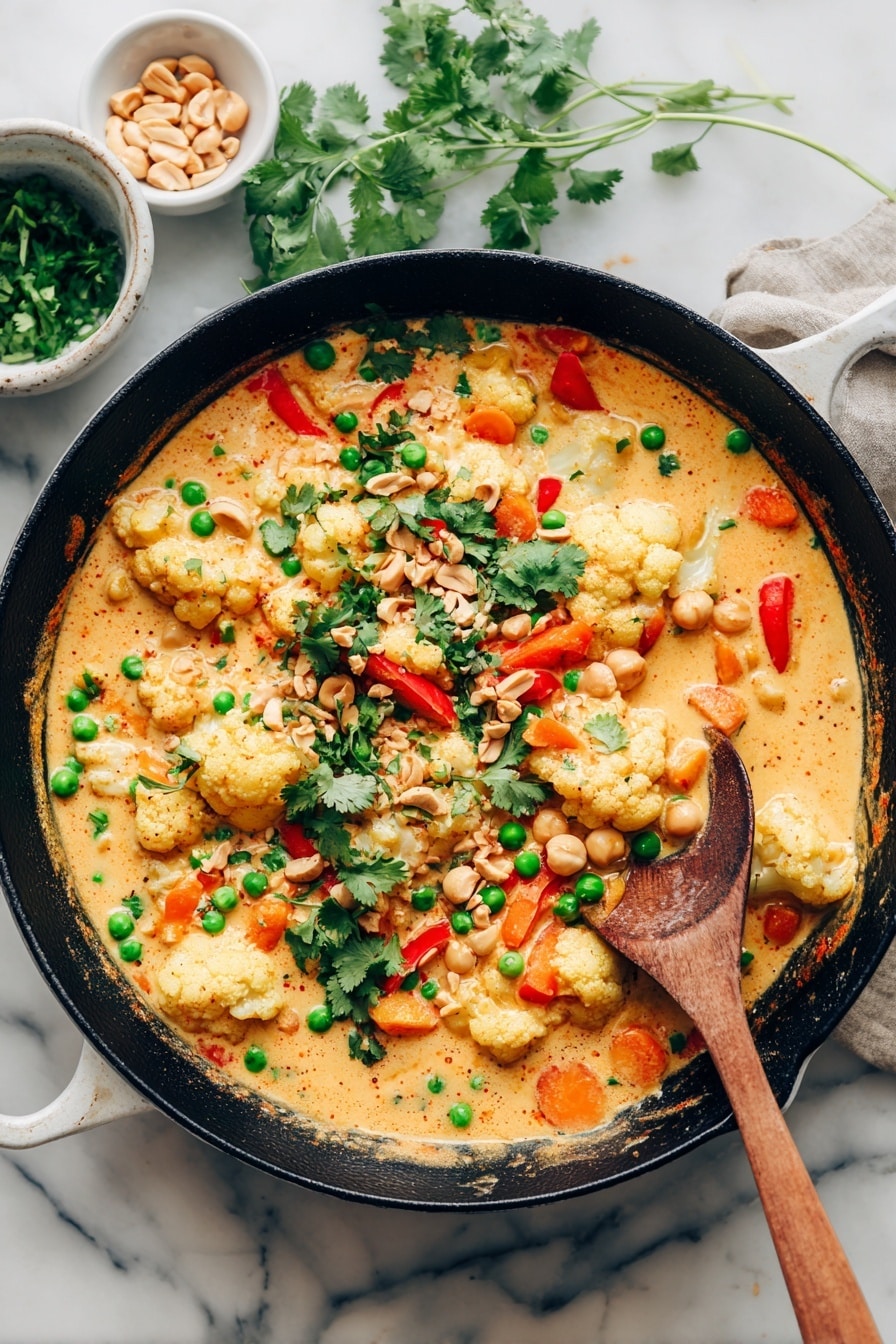
If you’re craving a plant-based meal that’s bursting with flavor and comes together quickly, you’re going to want to try this Thai Peanut Coconut Cauliflower Curry Recipe. I absolutely love how the creamy coconut milk and rich peanut butter blend with the warm spices and fresh veggies to create a curry that’s cozy, satisfying, and totally addictive. Whether you’re cooking for yourself or feeding a crowd, this recipe is a one-pan wonder that you’ll keep coming back to again and again.
Why You’ll Love This Recipe
- Quick and Easy: It only takes about 30 minutes from start to finish, perfect for busy weeknights.
- One-Pan Wonder: Minimal cleanup since everything cooks in a single skillet or pot.
- Loaded with Flavor: The combination of peanut butter, coconut milk, and Thai spices creates depth that everyone raves about.
- Plant-Based and Nutritious: Packed with protein-rich chickpeas, veggies, and healthy fats to fuel your body.

Ingredients You’ll Need
The magic of this Thai Peanut Coconut Cauliflower Curry Recipe comes from a beautiful balance of creamy, spicy, and fresh ingredients. I always recommend using fresh ginger and garlic if you can, as they really elevate the dish. Also, grab coconut milk from the refrigerated section if possible—it tends to be creamier and richer.
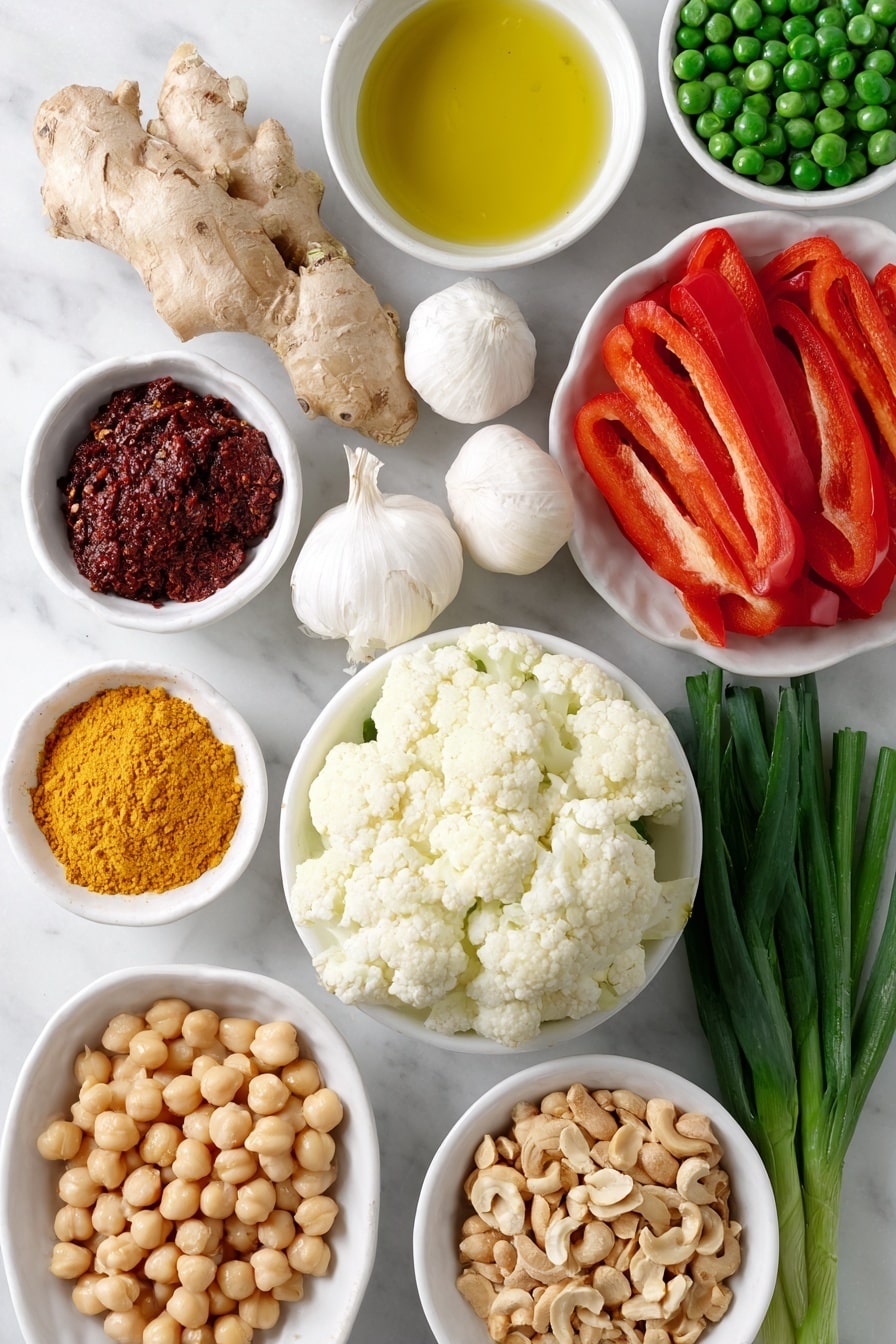
- Coconut Oil: Adds a subtle tropical aroma and helps sauté the veggies without overpowering the dish.
- Garlic: Freshly minced to bring that savory depth every curry needs.
- Fresh Ginger: Grated just before cooking to brighten the flavors.
- Carrot: Thinly sliced for a slight sweetness and crunch.
- Cauliflower Florets: The star veggie here—make sure they’re bite-sized for even cooking.
- Green Onions: Adds freshness and is used both in cooking and garnish for layered flavor.
- Lite Coconut Milk: Creamy base that balances the spice and adds richness.
- Water or Vegetarian Broth: Keeps the curry at the perfect consistency.
- Red Curry Paste: The heart of the Thai flavor —adjust amount depending on your heat preference.
- Natural Creamy Peanut Butter: Or cashew butter — this is what makes the curry so luscious and nutty.
- Gluten-Free Soy Sauce or Coconut Aminos: For that salty umami boost.
- Ground Turmeric: Adds warmth and a beautiful golden color.
- Cayenne Pepper: A pinch or more if you like things spicy.
- Salt: To bring all the flavors together.
- Red Pepper (Bell Pepper): Julienned for sweetness and color.
- Chickpeas: Rinsed and drained for plant-based protein and texture.
- Frozen Peas: Stirred in last for a pop of sweetness and vibrant green.
Variations
I love how flexible this Thai Peanut Coconut Cauliflower Curry Recipe is. You can switch up veggies or adjust the spice level to make it your own. When I’m feeling a bit more indulgent, I sometimes add extra peanut butter—because, why not? Feel free to play around so it fits your taste perfectly.
- Veggie Swap: I’ve made this with broccoli instead of cauliflower and it holds up beautifully, giving a slightly different texture.
- Protein Boost: Adding tofu or tempeh gives it a hearty boost, especially if you want extra plant protein.
- Heat Level: If you like it spicy, throw in an extra teaspoon of red curry paste or a splash of sriracha while cooking.
- Nut Allergy Friendly: Use sunflower seed butter instead of peanut butter, and omit chopped nuts for garnish.
How to Make Thai Peanut Coconut Cauliflower Curry Recipe
Step 1: Sauté Your Aromatics and Veggies
Heat up a large, deep skillet or pot over medium-high heat and melt the coconut oil. Right away, add your minced garlic and freshly grated ginger—let them sizzle for about 30 seconds until fragrant. This quick step is what layers in so much flavor. Then toss in the diced green onions, thinly sliced carrot, and cauliflower florets. Stir and sauté for around 3 to 5 minutes. The cauliflower should start turning a light golden color and the onions will soften—this caramelization is key, so don’t rush it!
Step 2: Build the Creamy Curry Sauce
Next up, pour in the lite coconut milk and water (or veggie broth if you prefer more flavor). Stir in your red curry paste and smooth in the peanut butter for that luscious creaminess. Add the gluten-free soy sauce or coconut aminos to balance the saltiness, then sprinkle in your turmeric, cayenne pepper, and salt. Stir everything well so all those flavors meld together into this beautiful sauce.
Step 3: Add Peppers, Chickpeas, and Simmer
Now fold in the julienned red pepper and rinsed chickpeas. Reduce the heat to medium-low and let the curry simmer gently for about 10 minutes. This lets the veggies soften and the chickpeas soak up the fragrant sauce. I always taste test here to adjust the seasoning—sometimes it needs a little more salt or heat, so trust your palate!
Step 4: Finish with Frozen Peas and Garnish
Right before serving, stir in the frozen peas and let them warm through for about a minute. Then ladle the curry into bowls and top with fresh cilantro, extra green onions, and a handful of chopped peanuts or cashews. These garnishes add texture and vibrant freshness that really make the dish pop. Enjoy it over brown rice or quinoa for a complete, protein-packed meal.
Pro Tips for Making Thai Peanut Coconut Cauliflower Curry Recipe
- Use Fresh Ginger and Garlic: Fresh ingredients bring a brightness you don’t get from powders or pre-minced options.
- Don’t Skip Sautéing the Veggies: This step caramelizes the cauliflower and veggies for deeper flavor and a better texture.
- Balance the Heat: Adjust curry paste and cayenne gradually to find your perfect spice level, especially if serving kids.
- Add Peas Last: Frozen peas cook fast and stay vibrant green when added right at the end, making the dish visually appealing and fresh-tasting.
How to Serve Thai Peanut Coconut Cauliflower Curry Recipe
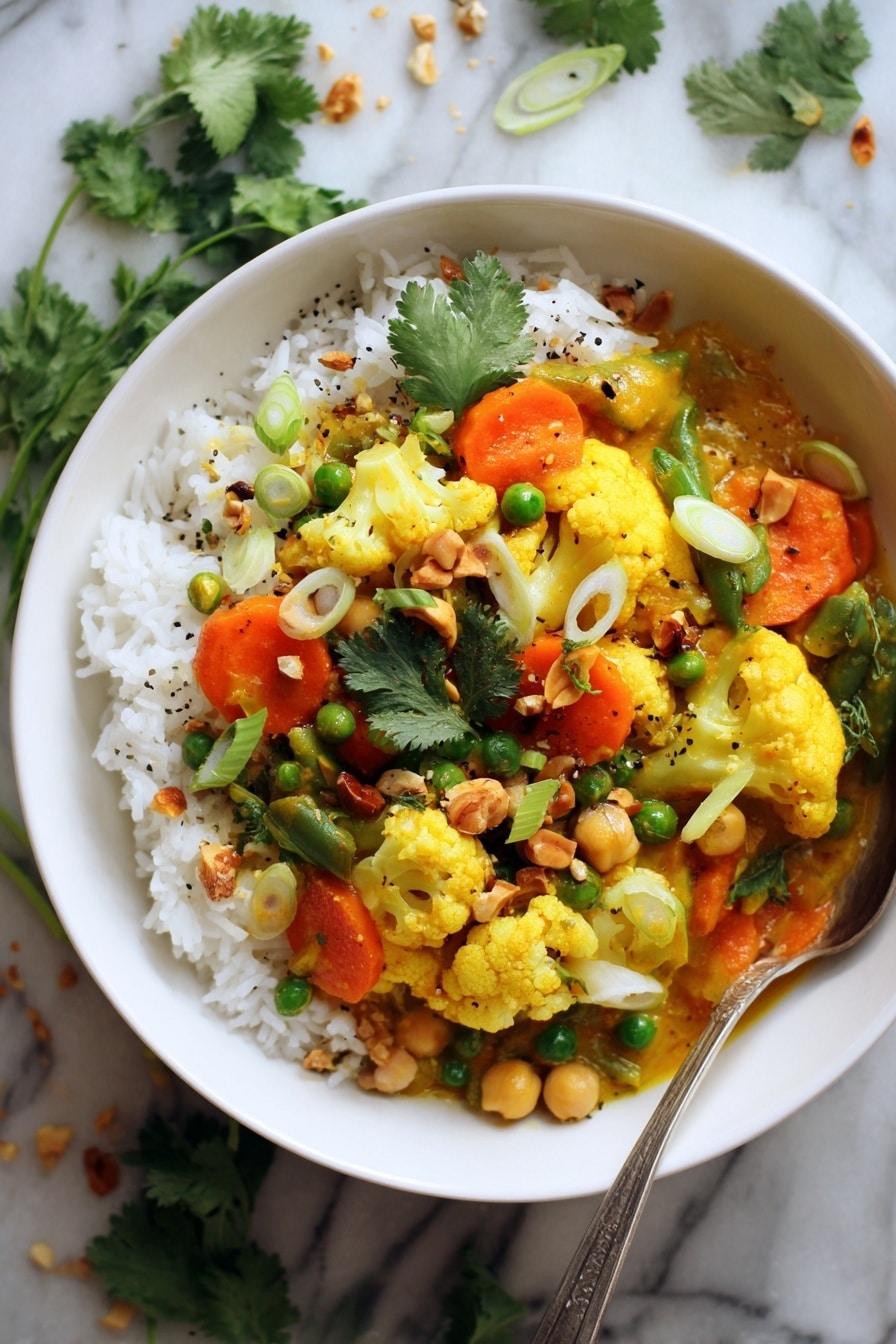
Garnishes
I’m a big fan of topping this curry with plenty of fresh cilantro—it brightens every bite. Alongside, I sprinkle extra diced green onions and chopped roasted peanuts or cashews for a crunchy contrast. These simple touches take the dish from good to restaurant-quality at home.
Side Dishes
Brown rice or fluffy quinoa are my go-to sides here since they soak up the sauce beautifully. If you want something lighter, steamed jasmine rice also pairs wonderfully. For extra greens, a side salad with tangy lime dressing complements the curry’s richness.
Creative Ways to Present
For special occasions, I love serving this curry in carved-out mini pumpkins or squash—makes for a stunning, seasonal presentation that guests remember. You could also make it in small ramekins for individual servings if you’re hosting a dinner party. Either way, the colors and aromas impress every time.
Make Ahead and Storage
Storing Leftovers
I usually store leftovers in airtight containers in the fridge for up to 4 days. The curry thickens as it sits, so you might want to add a splash of water or broth when reheating to loosen it back up.
Freezing
This curry freezes like a dream. Just portion it out into freezer-safe containers and freeze for up to 3 months. When you’re ready, thaw overnight in the fridge before reheating gently on the stove.
Reheating
I recommend reheating curry on the stovetop over low-medium heat with a splash of water or coconut milk to keep it creamy and smooth. Microwaving works too, but stirring midway helps it heat evenly.
FAQs
-
Can I make this Thai Peanut Coconut Cauliflower Curry Recipe vegan?
Yes! This recipe is naturally vegan as it uses plant-based ingredients like coconut milk, peanut butter, and chickpeas. Just be sure to check your red curry paste and soy sauce/coconut aminos to confirm they don’t contain fish sauce or other animal products.
-
Can I substitute cauliflower with other vegetables?
Absolutely! Broccoli, zucchini, or even sweet potatoes work well as alternatives. Just adjust the cooking time according to the vegetable’s firmness and size.
-
How spicy is this curry?
The recipe has a moderate level of heat from the red curry paste and cayenne pepper, but both can be adjusted up or down to suit your taste. If you prefer a milder dish, reduce or omit the cayenne.
-
Is peanut butter essential?
Peanut butter adds creaminess and a signature nutty flavor, but you can swap in cashew butter or sunflower seed butter if needed. Just keep in mind the flavor will vary slightly.
Final Thoughts
This Thai Peanut Coconut Cauliflower Curry Recipe is one of those dishes I always keep in my rotation because it’s so comforting and flavorful without any fuss. I love how every spoonful delivers a cozy hug of creamy coconut, spicy curry, and crunchy peanuts. If you’re looking to add a new favorite curry to your meal plan, give this one a try—you’ll be amazed at how quickly it becomes a go-to. Trust me, your kitchen and your taste buds will thank you!
Print
Thai Peanut Coconut Cauliflower Curry Recipe
- Prep Time: 15 minutes
- Cook Time: 15 minutes
- Total Time: 30 minutes
- Yield: 4 servings
- Category: Dinner
- Method: Stovetop
- Cuisine: Thai
- Diet: Vegetarian
Description
A vibrant and cozy Thai Peanut Coconut Cauliflower Chickpea Curry recipe that combines bold flavors, colorful vegetables, and plant-based protein. This one-pan vegetarian curry is easy to prepare and packed with nutrients, perfect for a satisfying weekday meal that comes together in just 30 minutes.
Ingredients
For the Curry
- ½ tablespoon coconut oil
- 3 cloves garlic, minced
- 1 tablespoon freshly grated ginger
- 1 large carrot, thinly sliced
- 1 small head cauliflower, broken into florets (3-4 cups)
- 1 bunch green onions, diced
- 1 (15 ounce) can lite coconut milk
- ⅓ cup water or vegetarian broth
- 2 tablespoons red curry paste
- 2 tablespoons natural creamy peanut butter (or cashew butter)
- ½ tablespoon gluten-free soy sauce or coconut aminos
- ½ teaspoon ground turmeric
- ½ teaspoon cayenne pepper, plus more if you like heat
- ½ teaspoon salt
- 1 red pepper, julienned
- 1 (15 ounce) can chickpeas, rinsed and drained
- ½ cup frozen peas
To Garnish
- Fresh cilantro
- Green onion
- Chopped peanuts or cashews
Instructions
- Sauté Aromatics and Vegetables: Place a large deep 10-inch skillet or a large pot over medium-high heat. Add the coconut oil, minced garlic, and freshly grated ginger. Cook for 30 seconds until fragrant. Then add the diced green onions, thinly sliced carrot, and cauliflower florets. Sauté for 3-5 minutes until the cauliflower starts to turn golden brown and the onions soften.
- Add Liquids and Spices: Pour in the lite coconut milk and ⅓ cup water or vegetarian broth. Stir in the red curry paste, natural creamy peanut butter (or cashew butter), gluten-free soy sauce or coconut aminos, cayenne pepper, ground turmeric, and salt. Mix everything thoroughly to combine all the flavors well.
- Simmer with Vegetables and Chickpeas: Add the julienned red pepper and rinsed chickpeas to the skillet. Reduce the heat to medium-low and let the curry simmer gently for 10 minutes. Stir occasionally to allow the flavors to meld. Taste and adjust seasoning as needed for heat and saltiness.
- Finish with Peas and Serve: Stir in the frozen peas and simmer for an additional minute to warm them through. Remove from heat and transfer the curry into serving bowls or meal prep containers.
- Garnish and Enjoy: Top each serving with fresh cilantro, additional diced green onion, and chopped peanuts or cashews for crunch. Serve with brown rice or quinoa for a complete, protein-packed plant-based meal. Enjoy your flavorful Thai Peanut Coconut Cauliflower Chickpea Curry!
Notes
- This recipe is a beautiful blend of bold Thai flavors with creamy peanut butter and rich coconut milk creating a comforting curry experience.
- It is vegetarian and plant-based, featuring chickpeas for protein and a variety of colorful vegetables.
- The entire dish cooks in one pan and takes only 30 minutes, making it ideal for busy weeknights or meal prep.
- Adjust the level of cayenne pepper based on your preferred spice tolerance.
- Serve with brown rice or quinoa to complete the meal with whole grains and additional protein.
Nutrition
- Serving Size: 1 serving
- Calories: 343 kcal
- Sugar: 7.4 g
- Sodium: 540 mg
- Fat: 15.2 g
- Saturated Fat: 9.5 g
- Unsaturated Fat: 5.7 g
- Trans Fat: 0 g
- Carbohydrates: 40.9 g
- Fiber: 9 g
- Protein: 10.6 g
- Cholesterol: 0 mg