If you’ve ever been a little intimidated by classic French dishes, this Sweet and Savory Duck à l’Orange Recipe is going to be a game-changer for you. I absolutely love how the rich, crispy duck pairs perfectly with that bright, tangy orange sauce that’s just sweet enough without being overpowering. When I first tried this recipe, I was amazed at how approachable it was, and how every bite felt like a little celebration. Stick around, and I’ll walk you through the entire process—from prepping the duck to creating that silky, aromatic sauce—so you can wow your family or dinner guests without stress.
Why You’ll Love This Recipe
- Perfect Balance of Flavors: Sweet citrus meets savory richness for a truly harmonious dish.
- Approachable Technique: Step-by-step instructions make a restaurant-worthy dish doable at home.
- Versatile for Any Occasion: Works great for special dinners or weekend treats with family.
- Sauce That Impresses: The homemade orange sauce is silky, tangy, and perfect for spooning generously.

Ingredients You’ll Need
Every ingredient in this Sweet and Savory Duck à l’Orange Recipe is chosen to complement one another and build that deep, complex sauce. You’ll find that the combination of fresh vegetables, stock, and citrus zest really brings out the best in the duck. When shopping, try and pick a fresh, good-quality duck and organic oranges if possible—the zest makes a difference!
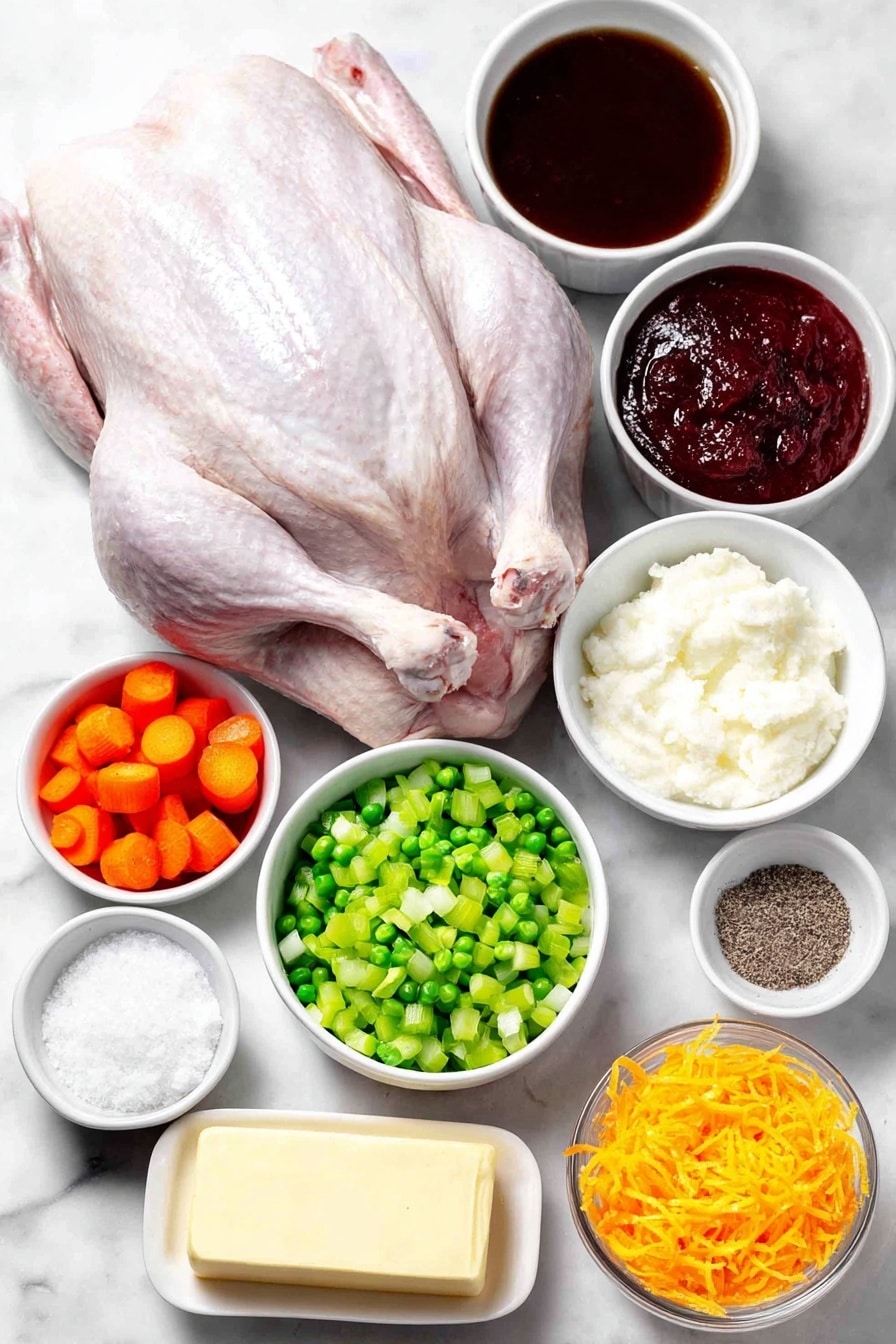
- Whole duck: Around 5 pounds is perfect—fresh or thawed from frozen, and trimmed well.
- Vegetable oil: For drizzling, helps with roasting and prevents sticking.
- Kosher salt: Essential for seasoning inside and out to draw out moisture and crisp skin.
- Carrot, onion, celery: Classic mirepoix veggies add a savory foundation to the sauce.
- Brown beef or chicken stock: Use a rich store-bought or homemade for the deepest flavor.
- Tomato paste (optional): Adds color and umami to the stock if you want a darker sauce.
- Granulated sugar: The base of the caramel that forms your gastrique, providing that sweet counterpoint.
- Red wine vinegar: Balances the sweetness with a sharp tang.
- Orange zest and juice: Fresh zest and juice really brighten the dish, with navel or bitter oranges depending on what’s available.
- Lemon juice: Adds acidity if you don’t have bitter orange juice.
- Freshly ground pepper: To season the sauce and add subtle spice.
- Cold unsalted butter: Whisked in at the end for a glossy, silky finish.
- Cornstarch or arrowroot (optional): To thicken the sauce if needed—sometimes stocks lack enough gelatin.
Variations
I’ve played around with this Sweet and Savory Duck à l’Orange Recipe quite a bit, and it’s so fun to tweak the flavors to match what you like or have on hand. Feel free to experiment with the sauce’s sweetness or try different cooking methods for the duck itself.
- Spatchcocked duck: I found that flattening the duck helps it roast more evenly and crisps the skin beautifully in less time.
- Use bitter orange if available: Adds a deeper, more traditional citrus flavor, but navel oranges work great too.
- Make it gluten-free: Just swap arrowroot for cornstarch and double-check your stock ingredients.
- Diet-friendly tweak: Remove the butter for a lighter sauce, but be sure to simmer a bit longer to maintain richness.
How to Make Sweet and Savory Duck à l’Orange Recipe
Step 1: Prep and Season the Duck
Start by deciding whether you want to spatchcock the duck—you’ll remove the backbone and flatten it. This helped me get more evenly cooked, crispy skin and shorten the roasting time. Trim any excess skin around the neck and cavity, remove wing tips (save them for the sauce), and prick the skin all over with a sharp knife to help release fat and crispen beautifully. Then, briefly dip the duck in boiling water—it sounds unusual, but this tightens the skin and helps it crisp later on. Salt generously inside and out and pop it in the fridge uncovered for at least an hour. Trust me, this step is a game-changer for crispy skin.
Step 2: Roast the Duck and Prepare the Sauce Base
Roast the trimmed wings, neck, and vegetables tossed with a bit of oil (and tomato paste, if you use it) until beautifully browned—this adds incredible depth to your sauce. Then transfer all those roasted bits to simmering stock and reduce it until it’s flavorful and almost syrupy—this step takes patience but is totally worth it. Strain and simmer again until concentrated. While that’s happening, increase your oven heat to roast the duck breast-side up, allowing the skin to brown nicely before slowing the heat to finish cooking through.
Step 3: Make the Orange Gastrique
The gastrique—a caramelized sugar and vinegar reduction—is the heart of this sauce’s sweetness and tang. Melt sugar with a little water until golden amber (watch it closely, it can burn fast), then carefully add red wine vinegar bit by bit to avoid boilovers. Simmer it gently until smooth and syrupy. This technique took me a couple tries, but once you get the hang of it, it’s straightforward and so rewarding; the aroma alone is fantastic!
Step 4: Finish the Sauce and Reheat the Duck
Blanch the orange zest briefly to soften and remove bitterness, then add it to your reduced stock along with fresh orange and lemon juices (or bitter orange juice if you have it). Simmer to infuse flavors, then stir in the gastrique carefully, tasting frequently, so the sauce hits that perfect sweet-and-sour balance. Whisk in cold butter off the heat for that smooth, glossy finish. If your sauce seems too thin, I’ve learned that whisking in a tiny cornstarch slurry helps it thicken without losing its shine. Before serving, pop the duck back in the oven to re-crisp the skin—it only takes a few minutes!
Pro Tips for Making Sweet and Savory Duck à l’Orange Recipe
- Prick the skin carefully: Don’t cut the meat—just poke holes to release fat and get crispy skin without drying out.
- Take your time with reductions: Slow simmering for the sauce builds richer flavor than rushing the process.
- Use cold butter for the sauce: Adding it off the heat makes the sauce silky without breaking or separating.
- Test the sauce thickness: If too thin, use a cornstarch slurry for a glossy coat that clings perfectly to the duck.
How to Serve Sweet and Savory Duck à l’Orange Recipe
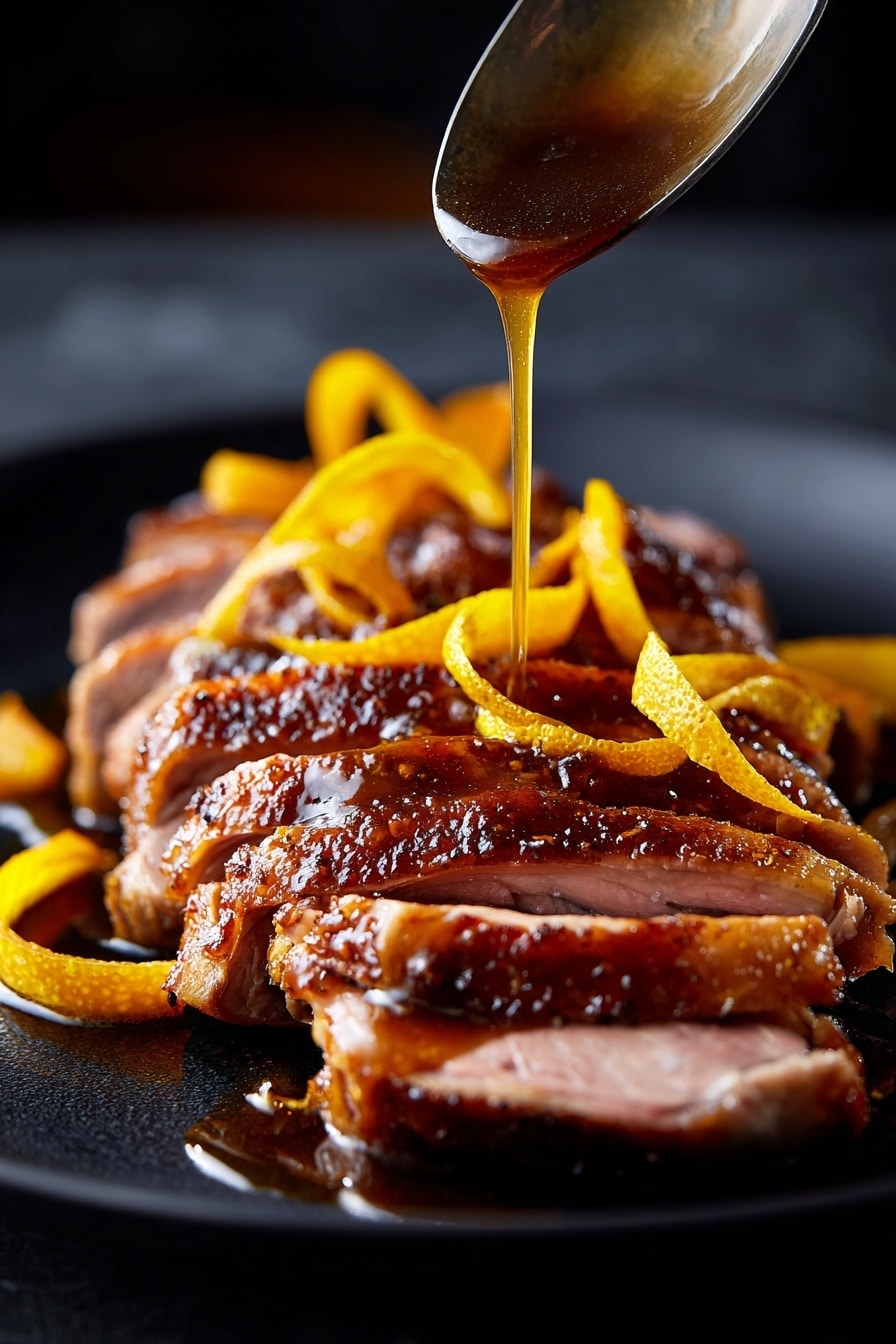
Garnishes
I love topping this dish with a little fresh orange zest or thin slices of orange for a pop of color and freshness. A sprinkle of chopped fresh herbs like thyme or parsley adds a nice green contrast and herbaceous lift that complements the citrus sauce gorgeously.
Side Dishes
For sides, my go-tos are creamy mashed potatoes or buttery roasted baby potatoes—they soak up the sauce like a dream. Steamed green beans or sautéed asparagus bring a fresh crunch that balances the richness of the duck. Sometimes, I serve it with wild rice or a simple green salad to keep things light and bright.
Creative Ways to Present
When I’ve had friends over, I like to carve the duck at the table—there’s something so dramatic about it! Plating the sauce both under and drizzled over the slices creates a gorgeous glossy effect. For a festive touch, arrange orange segments and a sprinkle of pomegranate seeds around the plate for color and a burst of sweet-tart flavor.
Make Ahead and Storage
Storing Leftovers
Leftover duck and sauce store well in airtight containers in the fridge for up to 3 days. I usually carve the duck before refrigerating to make reheating easier and to avoid drying out the whole bird.
Freezing
I’ve frozen leftover carved duck strips and sauce separately with good results—just make sure to cool everything completely before freezing. Defrost overnight in the fridge to preserve texture and flavor best.
Reheating
To reheat, I warm the sauce gently on the stove, whisking occasionally, and reheat the duck in a low oven (about 300°F) just enough to warm through and crisp the skin again. Avoid microwaving the duck—it tends to dry it out for me.
FAQs
-
Can I use duck breasts instead of a whole duck for this Sweet and Savory Duck à l’Orange Recipe?
Absolutely! Duck breasts can shorten cooking time and give you the same lovely flavors. Just sear the skin side until crispy and finish in the oven until medium-rare to medium, then prepare the sauce as usual. Keep in mind, though, the sauce is designed to complement the whole duck’s richness, so it may be a bit more intense with just breasts.
-
What if I can’t find bitter oranges?
No worries! Navel oranges work perfectly well. The flavor will be a bit milder and less tart, so I recommend adding a splash of fresh lemon juice to amp up the acidity and balance the sweetness in the gastrique.
-
How do I know when the duck is done?
Using an instant-read thermometer is your best bet. The thickest part of the duck (thigh or breast) should reach about 175°F for well-done meat—which is traditional with duck because of safety—but the meat stays moist if cooked properly, thanks to the fat rendered during roasting.
-
Can I make the sauce ahead of time?
Yes! The sauce can be made a day ahead and gently reheated on the stove. If it thickens too much, simply whisk in a splash of stock or water to loosen it up. Add the fresh zest and butter right before serving to retain brightness and silkiness.
Final Thoughts
This Sweet and Savory Duck à l’Orange Recipe has become one of my favorite go-to showstoppers that’s not as complicated as it looks. I love sharing it with friends because it feels special without requiring fancy techniques or rare ingredients. If you want a dish that’s packed with flavor, crispy skin, and that perfect balance of sweet and tangy, this is the one to try. Trust me, once you make it, you’ll find yourself coming back for more—it’s that good!
Print
Sweet and Savory Duck à l’Orange Recipe
- Prep Time: 25 minutes
- Cook Time: 5 hours
- Total Time: 5 hours 25 minutes
- Yield: 4 servings
- Category: Main Course
- Method: Roasting
- Cuisine: French
Description
Duck à l’Orange is a classic French dish featuring succulent roasted duck paired with a rich, tangy orange sauce. The recipe involves roasting the duck to crispy perfection and preparing a flavorful sauce made from reduced stock, caramelized sugar, vinegar, and fresh orange juice, resulting in a beautiful balance of sweet and savory flavors that complement the richness of the duck.
Ingredients
For the Duck:
- 1 whole duck (about 5 pounds; 2.25kg)
- Vegetable oil, for drizzling
- Kosher salt
For the Sauce:
- 1 medium carrot, diced
- 1 medium yellow onion, diced
- 1 large celery rib, diced
- 2 quarts (2 liters) brown beef or brown chicken stock (see note)
- 1 tablespoon (15ml) tomato paste (optional)
- 4 ounces (115g) granulated sugar (about 1/2 cup plus 1 tablespoon)
- 1/2 cup red wine vinegar
- Zest of 1 navel orange or 2 bitter oranges, cleaned of any white pith and cut into a fine julienne
- 2 tablespoons (30ml) fresh navel orange juice or 1/4 cup (60ml) bitter orange juice
- 2 tablespoons fresh lemon juice (omit if using bitter orange juice)
- Freshly ground white or black pepper
- 2 tablespoons (30g) cold unsalted butter
- Cornstarch or arrowroot (optional, only if needed)
Instructions
- Prepare the Duck: If desired, spatchcock the duck by removing the backbone with poultry shears and flattening the breast. Trim excess skin around the neck and cavity, remove wing tips, neck, and giblets, setting aside trimmings for the sauce or other uses.
- Prick the Skin: Using a sharp knife, prick the duck skin all over, especially where the skin is thickest, being careful not to pierce the meat underneath. This helps render fat during cooking.
- Blanch the Duck: Wearing heat-proof gloves, dip the duck into boiling water for 2 minutes to tighten the skin. Drain and place breast side up on a wire rack over a baking sheet.
- Season and Rest: Season the duck inside and out generously with kosher salt. Refrigerate uncovered for at least 1 hour and up to 24 hours for the skin to dry and flavors to develop.
- Roast Trimmings and Vegetables: Preheat the oven to 425°F (220°C). Toss the trimmed wings, neck, and optional backbone with diced carrot, onion, celery, and a drizzle of vegetable oil (and tomato paste if using). Roast on a baking sheet, stirring occasionally, until browned, about 25 minutes.
- Make the Stock Base: Transfer roasted trimmings and vegetables to a large saucepan with brown stock. Add boiling water to the roasting pan to deglaze and pour into the saucepan. Simmer gently, skimming fat and scum, until reduced by half, about 1 to 2 hours.
- Strain and Reduce Stock: Strain the stock through a fine mesh and continue to simmer the strained stock until reduced to about 1 cup (225ml), about 1 to 1.5 hours. Keep skimming and watching carefully to avoid burning.
- Roast the Duck: Increase oven temperature to 450°F (230°C). Roast the duck on the wire rack for 30 minutes to crisp the skin, then reduce oven to 300°F (150°C) and continue roasting until an internal temperature of 175°F (79°C) is reached in the thickest parts, about 45 minutes for spatchcocked or 1 hour for whole duck. Rest the duck after roasting.
- Prepare the Gastrique: In a small saucepan, combine sugar and 1/4 cup water over medium heat. Stir until boiling, then simmer without stirring until a deep amber caramel forms. Remove from heat and carefully add red wine vinegar in small increments while swirling to prevent boil-over. Return to heat, boil then simmer until slightly reduced and smooth, about 2 minutes.
- Blanch Orange Zest: Boil about 1 cup water and blanch orange zest until softened (2 minutes for navel orange, 15 minutes for bitter orange). Drain and set aside.
- Reheat Duck: Just before serving, return the duck to the oven for 5 to 15 minutes to heat through and re-crisp skin if needed.
- Finish the Sauce: Add orange and lemon juices (or bitter orange juice) to reduced stock and simmer until slightly thickened, about 5 minutes. Add gastrique teaspoon by teaspoon until balanced sweet and sour flavor is achieved. Season with salt and pepper.
- Enrich Sauce with Butter: Off the heat on very low setting, whisk in cold butter until sauce is smooth and glossy. If sauce is too thin, stir a cornstarch or arrowroot slurry into the sauce and simmer gently to thicken.
- Infuse Sauce with Zest: Add blanched orange zest and gently simmer over low heat for 1 minute, stirring constantly to infuse flavor.
- Serve: Carve the duck and serve with the warm orange sauce spooned on top or alongside.
Notes
- The sauce balances sweet and sour elements to cut through the duck’s richness perfectly.
- Spatchcocking helps the duck cook more evenly and faster but is optional.
- Using tomato paste in roasting vegetables and duck trimmings helps achieve a deeper stock color.
- Careful control of caramelization and gradual vinegar addition prevents bitterness or boil-over in the gastrique.
- The recipe yields extra gastrique sauce, which can be saved for use on grilled or roasted vegetables or in other dishes.
Nutrition
- Serving Size: 1/4 of duck with sauce
- Calories: 2323 kcal
- Sugar: 41 g
- Sodium: 1525 mg
- Fat: 176 g
- Saturated Fat: 61 g
- Unsaturated Fat: 0 g
- Trans Fat: 0 g
- Carbohydrates: 56 g
- Fiber: 2 g
- Protein: 121 g
- Cholesterol: 506 mg