
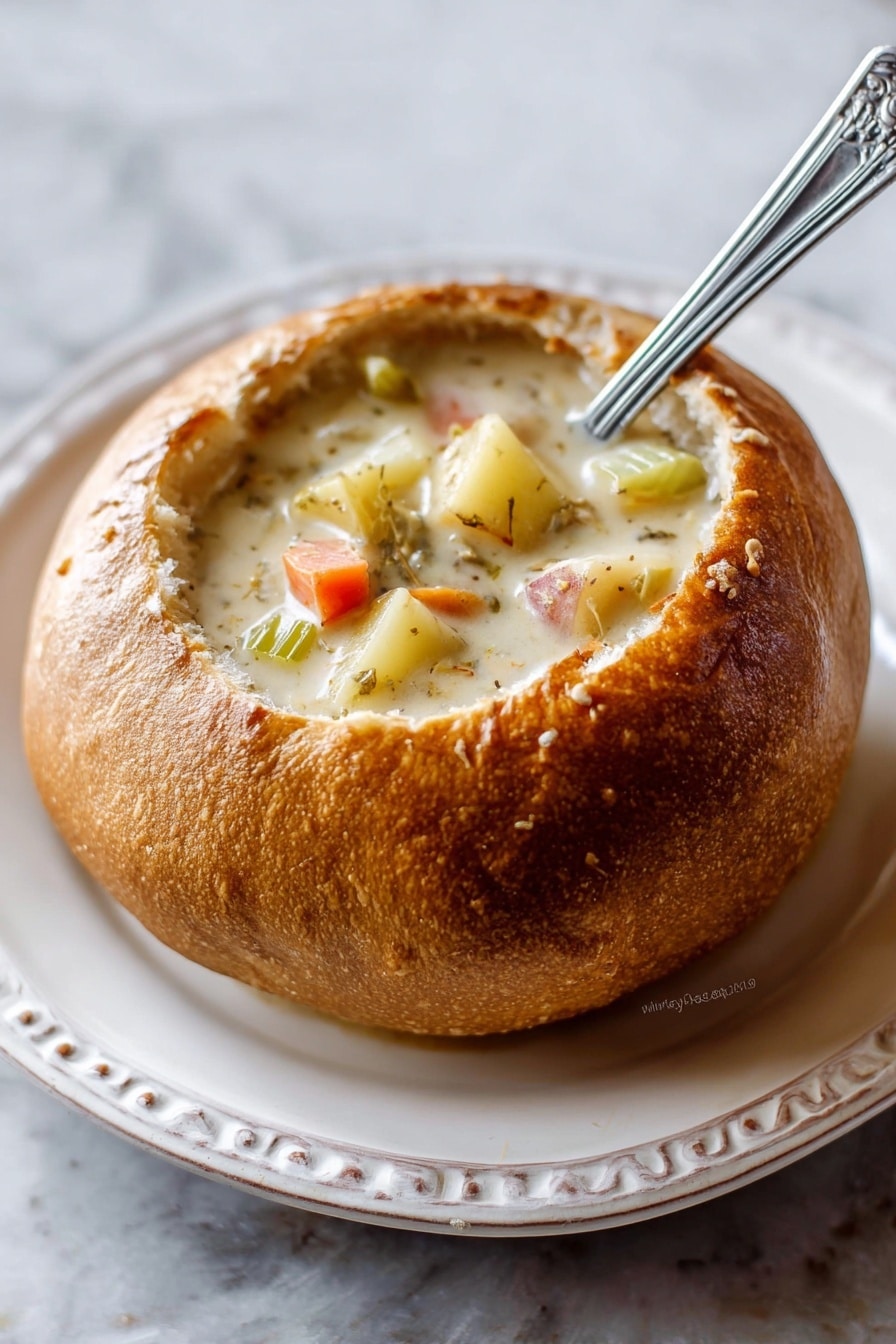
If you’ve ever wanted to wow your friends or family with something a little different for dinner, this Homemade Bread Bowls Recipe is an absolute game-changer. I’m telling you, once you get the hang of this, you’ll be making your own crusty, soft bread bowls for soups, stews, and dips all year round. It’s surprisingly easy and so rewarding—plus, the smell of fresh bread wafting through your kitchen? Pure magic.
Why You’ll Love This Recipe
- Fresh Homemade Flavor: There’s nothing like the taste and aroma of bread you made yourself—from scratch!
- Perfect for Entertaining: Your guests will be impressed, and you’ll enjoy how easy it is to serve soups in individual edible bowls.
- Satisfying and Versatile: Use these bread bowls with all kinds of fillings—from creamy chowders to chili or even loaded dips.
- Fun Baking Experience: Great way to get hands-on with bread baking—even if you’re a beginner, I’ll guide you through it!

Ingredients You’ll Need
The ingredients here are simple staples, but they come together beautifully to create a bread bowl that’s crusty on the outside and soft on the inside—just right for scooping up your favorite soups. I always recommend having your bread flour ready to go since it provides that chewy, hearty texture you want.
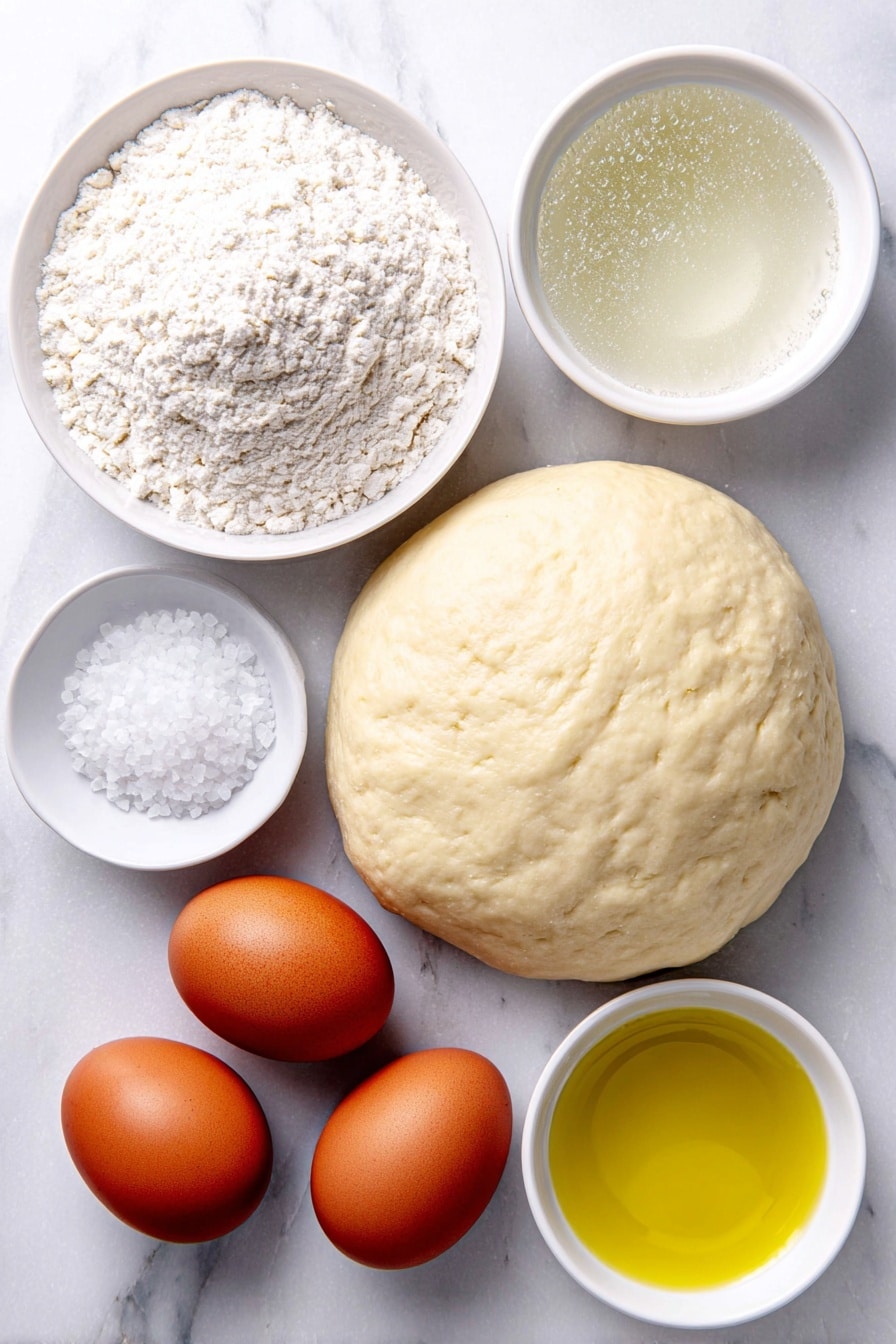
- Active Dry Yeast: I stick with Red Star® because it’s reliable and means your dough will rise nicely every time.
- Warm Water: Make sure it’s between 110°F and 115°F to activate the yeast without killing it—warm, not hot!
- Granulated Sugar: Just enough to feed the yeast and give a slight sweetness.
- Salt: Essential for flavor—don’t skip it or use too little.
- Olive Oil: Adds moisture and a subtle richness to the bread.
- Bread Flour: This is key for the right texture—regular flour won’t give the same chewy, crusty result.
- Egg (for egg wash): Gives the bread bowls their golden, glossy finish.
- Water or Milk (for egg wash): Helps thin the egg for easy brushing.
Variations
One of the best things about making your own bread bowls is that you can easily tweak the recipe to suit your taste or dietary needs. I’ve had great success customizing this recipe, and I encourage you to experiment to find what you love best.
- Whole Wheat Bread Bowls: I swapped half the bread flour for whole wheat and loved the hearty flavor and extra nutrients—it’s still soft inside but with a little nuttier taste.
- Herb-Infused Bowls: Mixing in some dried rosemary or thyme creates a fantastic aroma and subtle taste that pairs perfectly with savory soups.
- Gluten-Free Version: While I haven’t fully mastered this one yet, you can try a gluten-free bread flour blend—just keep in mind the texture will be different and may require extra binding agents.
- Mini Bread Bowls: Perfect for parties! Just divide the dough into smaller portions and bake for 15-20 minutes for adorable individual servings.
How to Make Homemade Bread Bowls Recipe
Step 1: Activate the Yeast
Start by pouring your warm water over the yeast in your mixing bowl—you can use either a stand mixer with a dough hook or just a large bowl if you’re kneading by hand. Whisk together gently and let it sit, covered, for about 5 minutes. You’ll want to see it get frothy and bubbly—that’s your yeast waking up and doing its magic!
Step 2: Mix the Dough
With your mixer on low speed, add the sugar, salt, olive oil, and 4 cups of bread flour. Let it mix for about a minute to start combining everything, then gradually add the remaining 2 cups of flour. The dough will be a little sticky, but don’t worry—that’s normal.
Step 3: Knead Until Just Right
Kneading is where the magic really happens. If you’re using a mixer, keep it running for 5-6 minutes. If you’re doing it by hand, lightly flour your surface and go to town for 5-6 minutes. I learned to judge when it’s ready using the “windowpane test”— gently stretch a small piece of dough to see if light passes through without tearing. If it does, you’re golden! If it tears, knead a bit more. The dough should be soft and springy, not dry or overly sticky.
Step 4: Let It Rise
Form your dough into a ball and place it in a greased bowl, turning once to coat the top. Cover it tightly with plastic wrap and find a warm spot to let it double in size—this usually takes about 90 minutes. On chilly days, I slide mine into a turned-off oven with the light on for a cozy, perfect rise.
Step 5: Shape the Bread Bowls
Once your dough is puffed up nicely, punch it down to release air bubbles. Turn it out onto your floured surface and divide it into six equal pieces. Shape each piece into a nice round ball and place them on parchment-lined baking sheets. Let them rest uncovered for 20 minutes while your oven preheats to 400°F (204°C).
Step 6: Egg Wash and Score
Brush each dough ball generously with your egg wash to get that lovely golden crust. Then score an X into the top with a sharp knife—this little detail helps them expand and looks beautiful once baked.
Step 7: Bake and Cool
Bake your bread bowls for about 30 minutes until they’re golden brown and an instant-read thermometer hits 195°F (90°C) in the center. Let them cool thoroughly before cutting—hot bread bowls will be tricky to hollow out without squashing. The longer they cool, the easier they are to work with.
Pro Tips for Making Homemade Bread Bowls Recipe
- Perfect Water Temperature: I always double-check my water with a kitchen thermometer because too hot or cold water can kill or not activate the yeast properly.
- Don’t Over-Flour: Adding too much flour while kneading makes the bread dry—aim for soft, slightly tacky dough that springs back.
- Use a Sharp Knife for Scoring: This prevents tearing and gives you clean, pretty edges once baked.
- Let the Bowls Cool Properly: I learned the hard way that cutting into hot bread bowls can collapse them! Patience pays off here.
How to Serve Homemade Bread Bowls Recipe
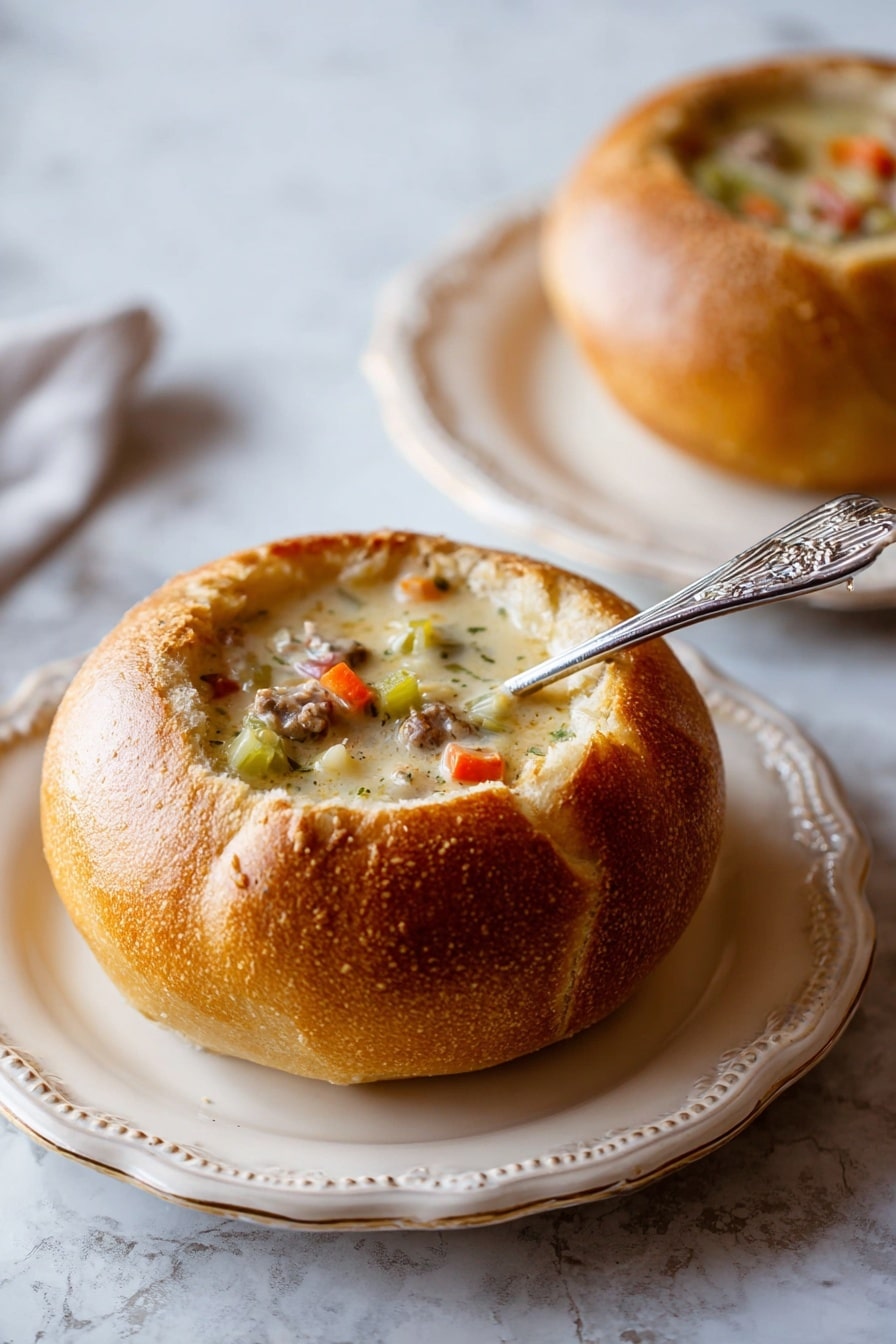
Garnishes
I love topping these bread bowls with a sprinkle of fresh herbs like parsley or chives right before serving—it adds a pop of color and a fresh note. Sometimes a dash of cracked black pepper or a little shredded cheese sprinkled on top works wonders as well.
Side Dishes
My family often pairs these bread bowls with a simple mixed green salad with a light vinaigrette or some roasted veggies to keep things balanced. They’re also fabulous alongside a charcuterie board for a cozy night in.
Creative Ways to Present
For special occasions, I like to arrange the filled bread bowls on a rustic wooden board with colorful napkins and fresh herbs scattered around. Another fun idea I’ve tried is carving little faces on the tops before baking for a festive touch—kids love that!
Make Ahead and Storage
Storing Leftovers
I find that storing leftover bread bowls at room temperature, wrapped loosely in foil or a clean kitchen towel, keeps them fresh for a couple of days. If you’re planning to keep them longer, the fridge works for up to a week but be aware they might get a bit firmer.
Freezing
Freezing bread bowls is a lifesaver. I wrap each completely cooled bread bowl tightly in plastic wrap and then in foil before freezing. They keep well for up to three months. When it’s soup night again, just thaw overnight in the fridge and warm gently before serving.
Reheating
To reheat, I pop the thawed bread bowls into a 350°F oven for about 10 minutes. This refreshes the crust and softens the interior—just be sure not to overheat or they’ll dry out. Reheating like this brings them back almost as good as fresh!
FAQs
-
Can I make the dough ahead and refrigerate it?
Absolutely! After kneading, you can cover the dough tightly and refrigerate it overnight. Just take it out a couple of hours before baking so it comes to room temperature and rises properly before shaping.
-
What kind of bread flour should I use?
I prefer bread flour with a high protein content (around 12-14%) because it helps develop more gluten, giving that chewy texture and strong structure perfect for bread bowls. It’s easy to find in most grocery stores or online.
-
Can I make this recipe without a stand mixer?
Yes! You can definitely knead the dough by hand. It just takes a bit more elbow grease, but it’s very satisfying. Just remember to flour your surface lightly and knead for 5-6 minutes until smooth and elastic.
-
How do I prevent the bread bowls from getting soggy?
Make sure to let the bread bowls cool completely before hollowing them out, and try to serve them immediately after filling. You can also brush the inside with a little olive oil or grated cheese for extra protection against sogginess.
-
What soups are best for bread bowls?
Thick, creamy soups like clam chowder, broccoli cheddar, or chili work best because they won’t leak and sog up the bread too quickly. But feel free to get creative—my family also loves loaded baked potato soup in bread bowls!
Final Thoughts
This Homemade Bread Bowls Recipe holds a special place in my heart because it turns a simple soup night into something a little more fun and fancy without complicated steps. I love sharing these with friends and family, seeing their faces light up when they pull out the warm, crusty bread bowls filled with delicious soup. Give it a try—I promise you’ll enjoy the process and the results just as much as I do.
Print
Homemade Bread Bowls Recipe
- Prep Time: 2 hr
- Cook Time: 30 min
- Total Time: 2 hr 30 min
- Yield: 6 large bread bowls
- Category: Bread
- Method: Baking
- Cuisine: American
Description
This Homemade Bread Bowls recipe teaches you how to create soft and crusty bread perfect for holding your favorite soups and stews. Using simple ingredients like yeast, flour, and olive oil, these bread bowls are baked golden brown with a tender interior. Perfect for a comforting meal and impressive presentation, these bread bowls are easy to shape and bake, with detailed steps ensuring beautiful results every time.
Ingredients
Yeast Mixture
- 2 packets Red Star® Active Dry Yeast (4 and 1/2 teaspoons)
- 2 and 1/4 cups (540ml) warm water (110°F – 115°F)
Dry Ingredients
- 6 cups (780g) bread flour (spooned & leveled), plus more for hands and surface
- 2 teaspoons granulated sugar
- 2 teaspoons salt
Wet Ingredients
- 2 Tablespoons (30ml) olive oil
- Egg wash: 1 large egg beaten with 1 Tablespoon water or milk
Instructions
- Activate Yeast: Pour the warm water over the yeast in a stand mixer bowl fitted with a dough hook or a large mixing bowl. Whisk gently and let it sit covered with a towel for 5 minutes until the mixture is frothy and foamy.
- Combine Ingredients: With the mixer on low speed, add sugar, salt, olive oil, and 4 cups of bread flour to the yeast mixture. Beat for 1 minute, then add the remaining 2 cups of flour.
- Knead Dough: Continue to knead the dough with the mixer for 5-6 minutes, or knead by hand on a floured surface for the same time. Add small amounts of flour if sticky, aiming for a soft and slightly tacky dough. Perform a windowpane test to ensure proper kneading.
- First Rise: Form the dough into a ball and place it in a greased bowl, turning to grease the top. Cover with plastic wrap and keep in a warm spot to rise until doubled in size, about 90 minutes. Use a warm oven if needed for a stable environment.
- Punch Down Dough: After rising, punch down the dough to release air bubbles, then transfer onto a floured surface and punch down again if necessary.
- Divide and Shape: Cut the dough into 6 even pieces. Shape each into a large ball and place onto parchment-lined baking sheets, 3 per sheet. Cover loosely and let rest for 20 minutes as the oven preheats.
- Prepare for Baking: Preheat oven to 400°F (204°C). Brush each dough ball with egg wash and score an X over the top with a sharp knife.
- Bake Bread Bowls: Bake the bread bowls for 30 minutes or until golden brown. Check doneness with an instant-read thermometer aiming for 195°F (90°C) internally.
- Cool and Serve: Allow the bread to cool until easily handled. Cut out a large round from the top of each bread bowl, scoop out the center, and use it for dipping. Fill the bowls with soup or your favorite fillings.
- Storage: Store leftover bread bowls at room temperature for up to 2 days, refrigerate for up to 1 week, or freeze for up to 3 months. Thaw frozen bread bowls overnight in the refrigerator before serving.
Notes
- Use the same mixing bowl for rising by greasing it with nonstick spray or olive oil to simplify cleanup.
- If the dough feels overly sticky, add flour sparingly to maintain softness without drying.
- The windowpane test is a helpful technique to check if dough is kneaded enough.
- Use the bread centers for delicious dipping to reduce waste and add extra flavor to your meal.
- Cooling longer makes the bread bowls easier to cut open without tearing.
Nutrition
- Serving Size: 1 bread bowl (approximately 150g)
- Calories: 320
- Sugar: 2g
- Sodium: 400mg
- Fat: 4g
- Saturated Fat: 0.5g
- Unsaturated Fat: 3g
- Trans Fat: 0g
- Carbohydrates: 60g
- Fiber: 3g
- Protein: 9g
- Cholesterol: 30mg