If you’re searching for the ultimate holiday treat, I absolutely love sharing this German Lebkuchen Cookies with Chocolate Glaze Recipe because it brings a cozy taste of German tradition right to your kitchen. These tender, aromatic cookies are a perfect balance of warm spices, nutty textures, and that irresistible chocolate glaze that makes every bite feel like a celebration. Trust me, once you try these, they’ll become your go-to festive cookie, and I’ll show you exactly how to nail them every time.
Why You’ll Love This Recipe
- Authentic Flavor: The traditional Lebkuchengewürz spice blend delivers that unmistakable warmth and festive cheer in every bite.
- Perfect Texture: A delightful mix of almond and hazelnut flours makes these cookies soft but with enough structure to hold the luscious glaze.
- Versatile Glazing: Choose between a rich chocolate glaze or a sweet sugar glaze for a treat that suits your mood or occasion.
- Long-lasting Freshness: These cookies actually improve in flavor after a few days stored properly, making them great for gifting or ahead-of-time prep.

Ingredients You’ll Need
The magic of this German Lebkuchen Cookies with Chocolate Glaze Recipe comes from using fresh, high-quality nuts and spices. Having homemade candied lemon and orange peel (I’ll share tips on that!) really elevates the flavor beyond any store-bought alternatives.

- Eggs: Make sure they’re large and at room temperature for the best batter consistency.
- Brown Sugar: Gives the cookies a deep caramel sweetness—don’t substitute with white sugar.
- Honey: Adds moisture and that classic Lebkuchen chewiness.
- Vanilla Extract: Enhances all the spices and nuts with a sweet aroma.
- Almond Flour: Adds nuttiness and structure; use finely ground for the best texture.
- Hazelnut Flour: Pairs beautifully with almond meal for authentic flavor and texture.
- Salt: Balances sweetness and boosts flavor.
- Baking Powder: Just a pinch helps the cookies rise softly without becoming cakey.
- Lebkuchengewürz: A special spice blend featuring cinnamon, cloves, anise, and more; homemade is golden here.
- Candied Lemon and Orange Peel: Chopped finely, these bring bursts of citrusy brightness.
- All-Purpose Flour: Used to coat the candied peel to prevent clumping—gluten-free options work too!
- Backoblaten (Oblaten): These edible baking wafers keep the cookies from sticking and add a traditional touch; white communion wafers are a fine substitute.
- Blanched Whole Almonds: Cut lengthwise for decorating each cookie.
- Chocolate (for glaze): Choose good-quality dark or milk chocolate for that shiny, indulgent coating.
- Coconut Oil: Gives the chocolate glaze smoothness and a nice sheen without overpowering flavor.
- Powdered Sugar and Water or Milk: For the simpler sugar glaze alternative, easy and sweet.
Variations
I like to play around with this German Lebkuchen Cookies with Chocolate Glaze Recipe sometimes, especially around holidays or when hosting. You can easily tweak the glaze or add your own favorite nuts or dried fruits to make it totally your own.
- Spice Swap: I once added a pinch of cardamom and star anise for extra aromatic depth; my friends loved the subtle twist!
- Glaze Options: For a lighter finish, try the sugar glaze instead of chocolate, or even a drizzle of white chocolate for a festive look.
- Nuts Variations: If hazelnuts aren’t your thing, you can replace them with walnuts or pecans for a slightly different but delicious flavor.
- Gluten-Free: Using gluten-free flour for coating the candied peels works perfectly, so no need to skip these if you’re gluten sensitive.
How to Make German Lebkuchen Cookies with Chocolate Glaze Recipe
Step 1: Prep the Candied Peel
Start by tossing your candied lemon and orange peel in about 1/4 cup of flour to keep the pieces from sticking together. Then, pop them in a food processor and pulse until finely minced. This step is crucial because it ensures every bite has evenly distributed citrusy bits without clumps. When I first tried skipping this, the peels bunched up, and it just wasn’t as pleasant.
Step 2: Mix Wet Ingredients
In a large bowl, beat the eggs until foamy. This aeration lightens the texture nicely. Beat in the brown sugar, honey, and vanilla extract until everything is well combined and glossy. I love how the honey adds a subtle chewiness that sets these apart from your typical cookie.
Step 3: Add Dry Ingredients and Peel
Next, stir in the almond flour, hazelnut flour, salt, baking powder, Lebkuchengewürz, and your minced candied peels. You can mix by hand, but using a stand mixer with a paddle attachment on low to medium speed for about 2 minutes makes it smoother and helps the nuts incorporate evenly. The batter should be wet but scoopable—if it’s too thin, add a little more almond or hazelnut flour.
Step 4: Scoop Onto Backoblaten
Place rounds of your batter onto the Backoblaten or communion wafers, smoothing the tops gently with the back of your spoon or spatula. Leave just a small gap at the edges so that the cookies bake evenly and don’t overflow. I like to work quickly but carefully here; it keeps the shapes neat and ensures consistent baking.
Step 5: Bake Low and Slow
Bake the Lebkuchen at 300°F (about 150°C) for 25-30 minutes on the middle rack. Baking them gently at a low temperature allows the flavors to meld and keeps the cookies from drying out. Once baked, let them cool completely on the baking sheet before glazing.
Step 6: Prepare and Apply the Glaze
For the chocolate glaze, melt your chocolate together with coconut oil in short bursts in the microwave, stirring often until smooth. For the sugar glaze, simply whisk powdered sugar with water or milk until you have a silky consistency. Dip half of each cookie in either glaze, letting excess drip off before placing them on a wire rack.
While the glaze is still wet, press three halved blanched almonds onto each cookie. This not only makes them look stunning but adds a lovely crunch that pairs perfectly with the soft dough.
Allow the glaze to harden fully at room temperature—this might take a couple of hours, but patience really pays off here. Store your finished Lebkuchen in an airtight container; these cookies actually get better and more flavorful with a day or two of resting!
Pro Tips for Making German Lebkuchen Cookies with Chocolate Glaze Recipe
- Use Fresh Nuts: Grinding your own almonds and hazelnuts or buying freshly ground flours makes a noticeable difference in texture and flavor.
- Don’t Skip the Flour Coating: Tossing candied peel in flour is a game-changer to prevent clumps and evenly spread those lovely citrus bursts.
- Low Temperature Baking: Bake at a low temp to avoid drying out the cookies, keeping them tender and chewy inside.
- Patience with Glazing: Let the glaze harden completely to avoid smudging and achieve that perfect shiny finish.
How to Serve German Lebkuchen Cookies with Chocolate Glaze Recipe

Garnishes
I like to keep it simple and elegant with these. The three almond halves on top add a classy crunch and look, but if I’m feeling festive, a light dusting of powdered sugar or some extra candied citrus peel on top after glazing really ups the charm. Sometimes, a tiny gold edible glitter sprinkle makes them magical for holiday parties.
Side Dishes
These Lebkuchen cookies are fantastic alongside a warm cup of mulled wine, spiced tea, or hot cocoa. They also pair beautifully with a mild cheese plate featuring nutty cheeses like Gruyère or aged Gouda for evening gatherings.
Creative Ways to Present
For gifting, I love arranging these cookies in rustic wooden boxes lined with parchment paper and tied with twine. On a holiday platter, setting them around some fresh sprigs of rosemary and cranberries adds a fresh, festive touch that makes these cookies feel extra special and inviting.
Make Ahead and Storage
Storing Leftovers
I keep leftover Lebkuchen in an airtight container at room temperature. The cookies actually get more flavorful after resting for a day or two, so try to wait before diving back in for the best experience. They typically stay fresh and soft for up to two weeks.
Freezing
If you want to stash some for later, these freeze beautifully. I wrap each cookie individually in plastic wrap and then place them in a freezer-safe container. When thawed overnight in the fridge, they taste just as good as fresh, sometimes even better because the flavors meld more fully.
Reheating
I usually enjoy these cold or at room temperature, but if you want to warm them slightly, a few seconds in the microwave (about 10 seconds) softens the chocolate glaze and revives the aroma, without making the cookie too soft or soggy.
FAQs
-
What is Lebkuchengewürz and can I make it at home?
Lebkuchengewürz is a traditional German spice mix typically made with cinnamon, cloves, allspice, cardamom, nutmeg, coriander, and sometimes anise. It’s easy to blend at home, and I highly recommend making your own for the freshest and most authentic flavor in your Lebkuchen cookies.
-
Can I substitute Backoblaten wafers with something else?
If you can’t find Backoblaten wafers, white communion wafers are the traditional substitute and work just fine. You can also bake the dough directly on parchment paper, though it changes the texture slightly.
-
How do I store Lebkuchen to keep them fresh?
Store Lebkuchen in an airtight container at room temperature. They keep well for two weeks and improve in flavor after a day or two. Avoid refrigeration because it can dry out the cookies.
-
Is this recipe gluten-free?
The main dough is naturally gluten-free since it uses nut flours. Just be sure to use gluten-free flour when coating the candied peels, and you’re good to go! Always double-check your spice mix ingredients to avoid hidden gluten.
-
Why are my Lebkuchen cookies too dry or crumbly?
Dry or crumbly Lebkuchen usually comes from overbaking or omitting honey. Baking at a lower temperature and making sure to include honey keeps the texture moist and tender. Also, beating the eggs well and not adding too much extra flour helps maintain the soft crumb.
Final Thoughts
This German Lebkuchen Cookies with Chocolate Glaze Recipe is such a joy to make and share. I remember making these with my family during the holiday season — the smell of spices and honey filling the kitchen is pure nostalgia. Once you try making them yourself, you’ll find how rewarding it is to bake something so deeply traditional and delicious, bringing a little German Christmas spirit into your home. I can’t recommend this recipe enough if you want a festive, flavor-packed cookie that’s every bit as special as it looks. So, gather your ingredients, get cozy in the kitchen, and let’s bake some magic!
Print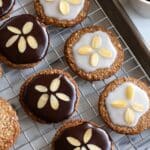
German Lebkuchen Cookies with Chocolate Glaze Recipe
- Prep Time: 20 minutes
- Cook Time: 25 minutes
- Total Time: 45 minutes
- Yield: 35 Lebkuchen using 70mm Backoblaten or 25 using 90mm Backoblaten
- Category: Dessert
- Method: Baking
- Cuisine: German
Description
Authentic German Lebkuchen, also known as Elisenlebkuchen, are traditional German Christmas cookies made with almond and hazelnut flours, spiced with a special Lebkuchengewürz mix, and enriched with candied citrus peels. Baked on delicate edible wafers or Backoblaten, these soft, flavorful treats are finished with either a rich chocolate or sweet sugar glaze and garnished with almonds. This recipe yields moist, aromatic cookies that improve in flavor over time and are a beloved holiday delicacy in Germany.
Ingredients
Wet Ingredients
- 5 large eggs
- 1 1/4 cup packed brown sugar
- 1/4 cup honey
- 1 teaspoon quality pure vanilla extract
Dry Ingredients
- 2 cups almond flour
- 2 cups hazelnut flour
- 1/4 teaspoon salt
- 1/2 teaspoon baking powder
- 3 teaspoons Lebkuchengewürz (traditional spice mix)
- 1/4 cup all-purpose flour (to coat candied peel; can substitute gluten-free)
Candied Peel
- 4 ounces candied lemon peel
- 4 ounces candied orange peel
Bases and Garnishes
- Backoblaten (either 70mm or 90mm) or white communion wafers as substitute
- Blanched whole almonds cut in half lengthwise
Chocolate Glaze
- 3 ounces quality dark or milk chocolate
- 2 teaspoons coconut oil (or oil of choice, do not use butter)
Sugar Glaze
- 1 cup sifted powdered sugar
- 3 tablespoons water or milk
Instructions
- Preheat Oven. Set your oven to 300 degrees Fahrenheit to prepare for baking your Lebkuchen evenly at a low temperature.
- Prepare Candied Peel. Toss the candied lemon and orange peel with about 1/4 cup all-purpose flour to prevent sticking. Pulse the floured peels in a food processor until finely minced, then set aside.
- Mix Wet Ingredients. In a large bowl, beat the eggs until foamy. Add the packed brown sugar, honey, and vanilla extract; beat until fully combined to create a smooth, sweet base.
- Combine Dry Ingredients and Spices. Add almond flour, hazelnut flour, salt, baking powder, Lebkuchengewürz, and the minced candied peels to the wet mixture. Stir vigorously until all ingredients are thoroughly combined. If the batter is too thin to scoop, add more almond or hazelnut meal. For ease, a stand mixer with paddle attachment can be used to beat the mixture for about 2 minutes.
- Shape on Wafers. Scoop the mixture onto the Backoblaten wafers, smoothing the top and leaving a slight margin around the edges. Arrange these on a lined baking sheet.
- Bake the Lebkuchen. Place the baking sheet on the middle rack and bake for 25–30 minutes until set and lightly firm to touch. Remove and cool completely on the sheet.
- Prepare Chocolate Glaze. In a small bowl, melt the chocolate and coconut oil together in the microwave until smooth.
- Prepare Sugar Glaze. In another small bowl, stir powdered sugar with water or milk until a smooth glaze forms.
- Glaze the Cookies. Set a wire rack over a cookie sheet to catch drips. Dip half of the cooled Lebkuchen in the chocolate glaze, allowing excess to drip off, and the other half in the sugar glaze accordingly. Place them on the wire rack.
- Garnish and Dry. Immediately arrange three half almonds on each glazed Lebkuchen while wet. Allow the glazes to harden completely before storing.
- Store Properly. Keep Lebkuchen in an airtight container. They will keep for several weeks, with flavor improving over time.
Notes
- One of Germany’s most cherished Christmas treats, these Lebkuchen offer authentic traditional flavors of the holiday season.
- Backoblaten wafers are essential for authentic texture and presentation but can be substituted with white communion wafers if necessary.
- Homemade Lebkuchengewürz and candied citrus peels are highly recommended for the best authentic flavor.
- The glaze choices allow a delightful variation: chocolate provides richness, while sugar glaze adds sweetness and a glossy finish.
- This recipe yields about 35 cookies when using 70mm wafers and about 25 when using 90mm wafers.
Nutrition
- Serving Size: 1 Lebkuchen
- Calories: 175 kcal
- Sugar: 19 g
- Sodium: 34 mg
- Fat: 9 g
- Saturated Fat: 1 g
- Unsaturated Fat: 7 g
- Trans Fat: 0 g
- Carbohydrates: 22 g
- Fiber: 1 g
- Protein: 3 g
- Cholesterol: 23 mg